




-250x250w.jpg "GAUZE ROLL Egypt size 7 cm")
-250x250w.jpg "compress with cover")




about product
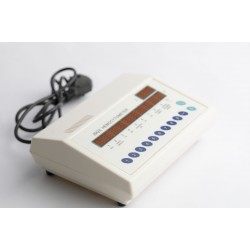
A spectrophotometer is an analytical instrument used to measure the intensity of light at different wavelengths within the visible spectrum or in other parts of the electromagnetic spectrum (e.g., ultraviolet, infrared). It helps quantify how much light is absorbed by a sample, which can be related to its concentration or properties.
Working Principle:
A spectrophotometer works by passing light through a sample and detecting how much light is transmitted or absorbed by the sample at each wavelength. The amount of light absorbed by the sample is typically proportional to the concentration of the substance in the sample, according to Beer-Lambert Law.
Main Components:
- Light Source: Provides a beam of light. Common sources include tungsten bulbs (for visible light) or deuterium lamps (for ultraviolet light).
- Monochromator: Filters or disperses light into its component wavelengths. It selects the specific wavelength of light to be passed through the sample.
- Sample Holder: A cuvette (usually made of glass or plastic) that holds the sample.
- Detector: Measures the amount of light that passes through the sample. It converts the light into an electrical signal.
- Display/Readout: The output is usually displayed in terms of absorbance or transmittance on a digital screen.
Types of Spectrophotometers:
- UV-Vis Spectrophotometer: Measures the absorption of ultraviolet (UV) and visible light (Vis), typically used in chemical analysis, biological studies, and for determining concentrations of solutions.
- Infrared Spectrophotometer (IR): Measures infrared light absorption, commonly used for identifying molecular structures or functional groups in a sample.
- Fluorescence Spectrophotometer: Measures the emitted light after a sample absorbs light, used for sensitive detection of compounds.
Applications:
- Chemical Analysis: Determining the concentration of solutes in a solution by measuring absorption at specific wavelengths.
- Biology and Medicine: Measuring the concentration of nucleic acids, proteins, or other biomolecules.
- Environmental Testing: Analyzing pollutants or toxins in air, water, or soil samples.
- Quality Control in Industry: Monitoring and ensuring product consistency in manufacturing, such as in food, pharmaceuticals, and cosmetics.
- Research: Used extensively in scientific research for identifying substances and studying their properties.
Advantages:
- Non-destructive: Spectrophotometers do not destroy the sample, making it ideal for repeated measurements.
- Highly Accurate: Provides precise and reliable measurements of absorption or transmission.
- Versatile: Can be used for a wide range of applications in various industries.
Limitations:
- Sample Preparation: Some samples may require preparation (such as dilution or filtration) for accurate results.
- Interference: Other substances in the sample might interfere with the readings if they absorb light at the same wavelengths.
- Stock: 2-3 Days
A spectrophotometer is an analytical instrument used to measure the intensity of light at different wavelengths within the visible spectrum or in other parts of the electromagnetic spectrum (e.g., ultraviolet, infrared). It helps quantify how much light is absorbed by a sample, which can be related to its concentration or properties.
Working Principle:
A spectrophotometer works by passing light through a sample and detecting how much light is transmitted or absorbed by the sample at each wavelength. The amount of light absorbed by the sample is typically proportional to the concentration of the substance in the sample, according to Beer-Lambert Law.
Main Components:
- Light Source: Provides a beam of light. Common sources include tungsten bulbs (for visible light) or deuterium lamps (for ultraviolet light).
- Monochromator: Filters or disperses light into its component wavelengths. It selects the specific wavelength of light to be passed through the sample.
- Sample Holder: A cuvette (usually made of glass or plastic) that holds the sample.
- Detector: Measures the amount of light that passes through the sample. It converts the light into an electrical signal.
- Display/Readout: The output is usually displayed in terms of absorbance or transmittance on a digital screen.
Types of Spectrophotometers:
- UV-Vis Spectrophotometer: Measures the absorption of ultraviolet (UV) and visible light (Vis), typically used in chemical analysis, biological studies, and for determining concentrations of solutions.
- Infrared Spectrophotometer (IR): Measures infrared light absorption, commonly used for identifying molecular structures or functional groups in a sample.
- Fluorescence Spectrophotometer: Measures the emitted light after a sample absorbs light, used for sensitive detection of compounds.
Applications:
- Chemical Analysis: Determining the concentration of solutes in a solution by measuring absorption at specific wavelengths.
- Biology and Medicine: Measuring the concentration of nucleic acids, proteins, or other biomolecules.
- Environmental Testing: Analyzing pollutants or toxins in air, water, or soil samples.
- Quality Control in Industry: Monitoring and ensuring product consistency in manufacturing, such as in food, pharmaceuticals, and cosmetics.
- Research: Used extensively in scientific research for identifying substances and studying their properties.
Advantages:
- Non-destructive: Spectrophotometers do not destroy the sample, making it ideal for repeated measurements.
- Highly Accurate: Provides precise and reliable measurements of absorption or transmission.
- Versatile: Can be used for a wide range of applications in various industries.
Limitations:
- Sample Preparation: Some samples may require preparation (such as dilution or filtration) for accurate results.
- Interference: Other substances in the sample might interfere with the readings if they absorb light at the same wavelengths.