








-250x250w.jpg "GAUZE ROLL Egypt size 7 cm")
-250x250w.jpg "compress with cover")





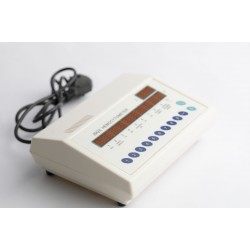
Laboratory Balance
about product
A laboratory balance is a device used in scientific laboratories to measure masses with high accuracy. This balance is characterized by its ability to measure very small weights compared to a regular balance, making it ideal for scientific research and chemical and physical experiments.
Main types of laboratory balances:
1. Analytical Balance:
• Used to measure weights with very high accuracy (up to 0.0001 grams or less).
• It has a transparent cover to protect the accuracy of measurements from the effects of air.
2. Precision Balance:
• Less accurate than the analytical balance but still used for accurate measurements.
• Used to measure larger weights, usually up to 0.001 grams.
3. Electronic Balance:
• Uses electronic sensors to convert weight into digital readings, making it easier to read results more accurately and quickly.
Uses:
• In chemistry: to measure chemicals accurately.
• In scientific research: to analyze weights in precise experiments.
• In the pharmaceutical industry: to measure drugs and active ingredients.
Features of Laboratory Balance:
• High accuracy: These devices provide very accurate measurements.
• Ease of use: Many modern balances come with digital displays to easily read measurements.
• Stability: Some balances provide designs to ensure stability of measurement, which reduces human error.
Balances in laboratories are essential tools for ensuring the accuracy of measurements in experiments and research, and are essential in many scientific fields
SAR 103.50
Ex Tax: SAR 103.50
- Stock: 5
A laboratory balance is a device used in scientific laboratories to measure masses with high accuracy. This balance is characterized by its ability to measure very small weights compared to a regular balance, making it ideal for scientific research and chemical and physical experiments.
Main types of laboratory balances:
1. Analytical Balance:
• Used to measure weights with very high accuracy (up to 0.0001 grams or less).
• It has a transparent cover to protect the accuracy of measurements from the effects of air.
2. Precision Balance:
• Less accurate than the analytical balance but still used for accurate measurements.
• Used to measure larger weights, usually up to 0.001 grams.
3. Electronic Balance:
• Uses electronic sensors to convert weight into digital readings, making it easier to read results more accurately and quickly.
Uses:
• In chemistry: to measure chemicals accurately.
• In scientific research: to analyze weights in precise experiments.
• In the pharmaceutical industry: to measure drugs and active ingredients.
Features of Laboratory Balance:
• High accuracy: These devices provide very accurate measurements.
• Ease of use: Many modern balances come with digital displays to easily read measurements.
• Stability: Some balances provide designs to ensure stability of measurement, which reduces human error.
Balances in laboratories are essential tools for ensuring the accuracy of measurements in experiments and research, and are essential in many scientific fields